.svg)
Caught between rising costs and affordable premiums

The CSS Group, based in Lucerne, was founded in 1899. It insures around 1.7 million people and, with a premium volume of around CHF 7.0 billion, is one of Switzerland's leading health and property insurers. With around 100 agencies and 3,000 employees, CSS is close to its customers throughout Switzerland. As a health partner, it supports its customers when it comes to leading a healthy life, actively taking steps to regain one's health and developing a mindful approach to illness.
IFBC regularly supports CSS with complex financial matters and the further development of financial management, and helps to increase transparency with regard to cost structures and allocation. In an interview, Rudolf Bruder, Head of Finance, gives his views on the healthcare system in Switzerland and describes the challenges that arise in the financial management of a large health and property insurer.
As a family man, it is particularly important to me to spend my free time with my wife and our four children.
Analyses by the CSS Institute show that new drugs are currently the main reason for the rise in healthcare costs. Another driver is false incentives in the system that reward quantity over quality.
Key reforms include the introduction of a new medical tariff and uniform financing of outpatient and inpatient services. In addition, further measures are needed, in particular the consistent implementation of integrated care models with coordinated care across all stages of treatment.
Thanks to consistent checks on all 25 million invoices received, we prevent around CHF 850 million in unjustified expenses each year. In 2024, we also processed 260 cases of fraud, saving CHF 38 million.
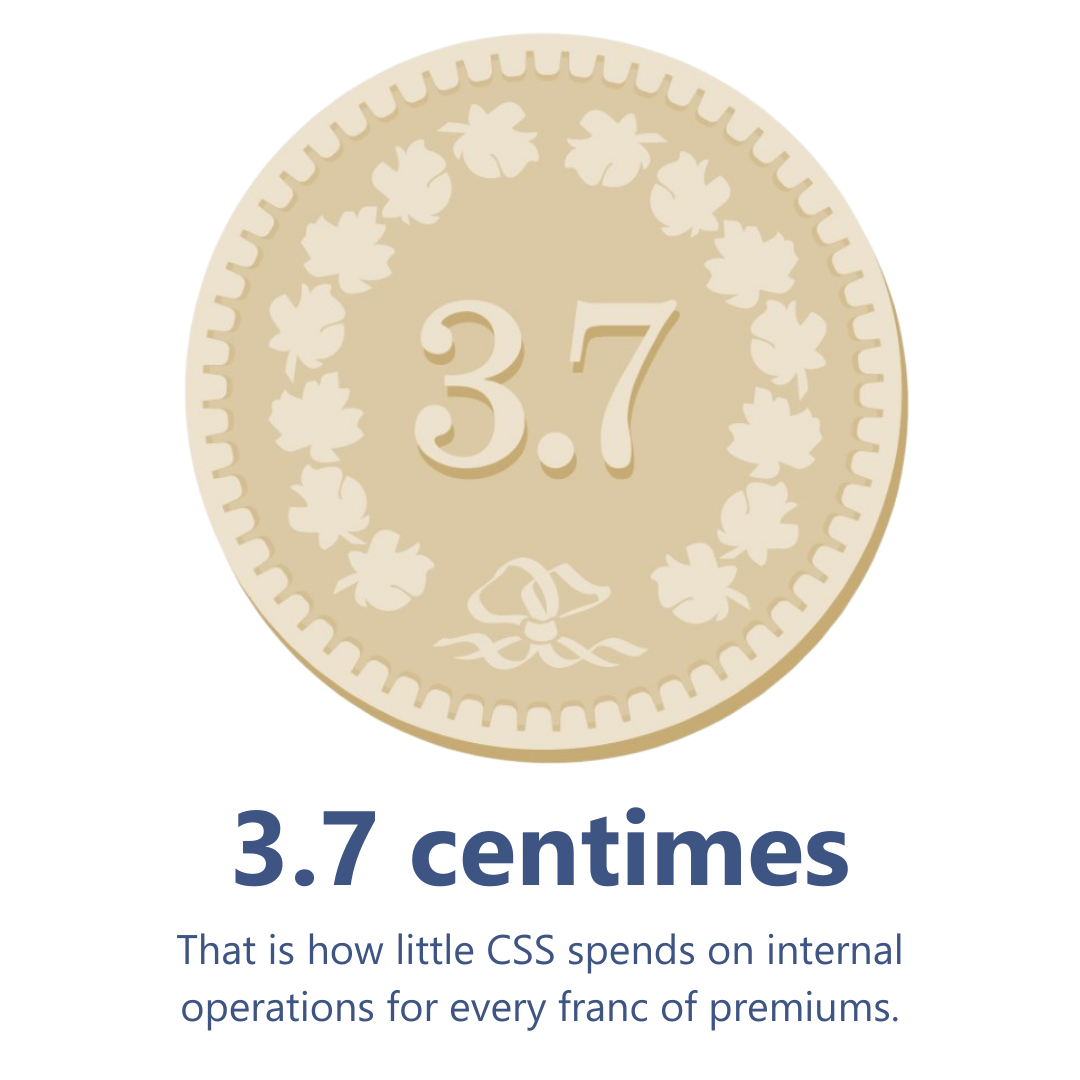
In addition to the invoice checks I just mentioned, our low administrative costs are a key factor. We spend just 3.7 centimes of every premium franc on internal operations. The high level of satisfaction and loyalty among our policyholders is the result of years of investment in customer service.
Financial management is influenced by three factors: estimating future benefit costs, calculating the correct premiums based on these estimates, and at the same time achieving the solvency ratios required by the supervisory authorities. This is a challenge that can only be met if all processes within CSS are precisely coordinated.
A study by McKinsey shows that consistent digitization and the use of electronic patient records could save around CHF 8.2 billion annually in the healthcare sector. At the same time, digitization would significantly improve the quality of the available data. This is also pointed out in a study by the CSS Institute: Currently, health data in Switzerland is incomplete and fragmented. Improved data would enable the Swiss healthcare system to be developed on an evidence-based basis and ensure that high-quality care remains affordable for all in the long term.
CSS brings many years of experience and in-depth expertise to the development of integrated care models. When all healthcare stakeholders work hand in hand, this improves the quality of treatment and helps to curb costs. CSS sees itself as a partner: it advises its institutions, develops new approaches, and helps to break down barriers to cooperation.

Rudolf Bruder is a business economist (HWV) and holds an Executive Master of Corporate Finance. He joined CSS in 2023 as Head of Finance. Prior to this, he held various management positions at competitor Helsana for many years. The 55-year-old is married and has four children. He lives with his family in the canton of Zug.




%202.webp)


